
If you have ever been served a Guinness that tastes sour, metallic, flat, or strangely bitter, the cause is often not the pour — but what happened before the pint reached the glass.
“Cleaning the lines” is one of the least visible but most important aspects of serving Guinness. It takes place out of sight, usually in the cellar, and when it is neglected, no amount of care at the bar can correct the result.
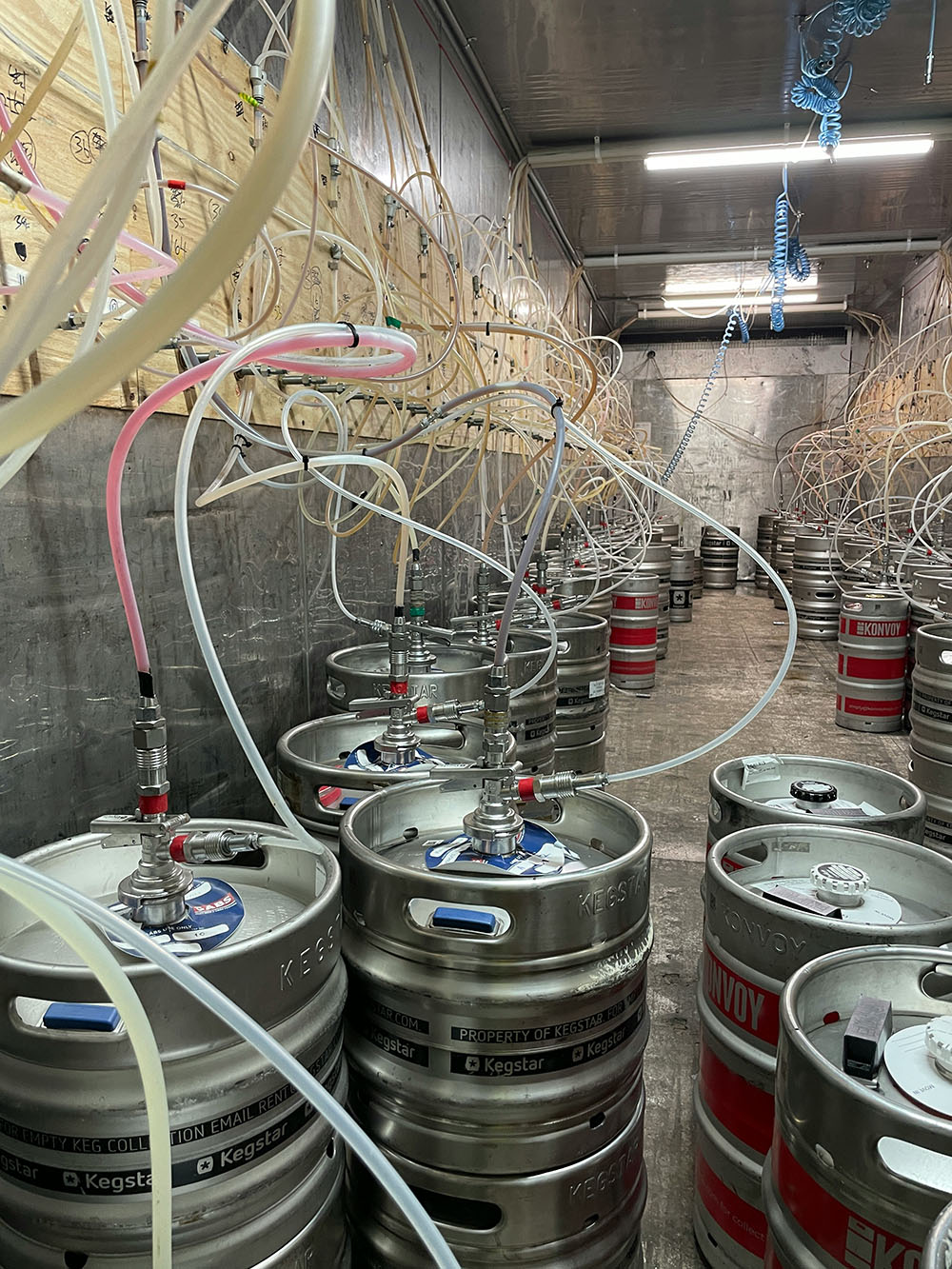
What Are Beer Lines?
Beer lines are the pipes that carry Guinness from the keg in the cellar to the tap at the bar. In many venues, these lines run several metres and remain under constant pressure.
As beer passes through them, residue builds up naturally. This includes yeast, protein, beer stone, and microorganisms. This build-up is unavoidable — but it must be managed.
If it is not, it directly affects the quality of the Guinness in the glass.
What “Cleaning the Lines” Actually Involves
Cleaning beer lines is not simply flushing them with water.
According to Guinness (Diageo) on-trade dispense guidance, proper line cleaning involves:
- Disconnecting the keg
- Circulating a specialist chemical cleaning solution through the lines
- Allowing sufficient contact time for the solution to break down residue and biofilm
- Thoroughly flushing the system with clean water
- Reconnecting the keg and pulling beer through before serving
Water alone does not remove biofilm or microbial build-up. Chemical cleaning is essential.
How Often Should Guinness Lines Be Cleaned?
Guinness, through Diageo’s on-trade quality and dispense training materials, states that beer lines should be cleaned at least every seven days.
This seven-day standard is also supported by broader hospitality industry best practice and professional dispense organisations. It is not an arbitrary number — it reflects how quickly microbial build-up can occur in beer lines under normal operating conditions.
In busy venues, this schedule is essential to maintain consistent quality.
Lines cleaned less frequently are significantly more likely to produce off-flavours.
What Happens When Lines Are Not Cleaned Properly
Poor line hygiene affects Guinness in ways that are often subtle at first, but unmistakable over time.
Common symptoms include:
- Sour or acidic flavours
- Metallic or chemical notes
- Harsh or lingering bitterness
- Poor head formation
- Inconsistent texture from pint to pint
These faults are frequently misattributed to pouring technique or glassware. In reality, they often originate inside the lines.
Once beer has been compromised in the dispense system, it cannot be fixed at the bar.
The Role of the Cellar in Guinness Quality
Line cleaning is only one part of proper Guinness storage.
Guinness on-trade guidance also emphasises the importance of correct cellar management, including:
- Stable, cool storage temperatures
- Correct gas pressure and gas mix
- Clean, dry cellar conditions
- Proper keg handling and rotation
Temperature fluctuations, poor pressure control, or unclean cellar environments can all damage Guinness before it is ever poured.
A well-maintained cellar supports consistent dispense; a poorly managed one undermines it.
Why These Issues Are Largely Invisible to Customers
Customers rarely see the cellar, the lines, or the cleaning schedule. They judge only what arrives in the glass.
This creates a common imbalance: visible elements such as the pouring ritual receive attention, while invisible maintenance does not.
A Guinness can look correct and still taste wrong if the lines or cellar are poorly managed.
Why Guinness Is Particularly Sensitive
Guinness is especially sensitive to dispense conditions because of its nitrogen-based system, smooth texture, and subtle flavour profile.
Small faults — sourness, metallic notes, bitterness — stand out quickly. This is why Guinness consistency depends so heavily on proper line cleaning and cellar control.
A bar that follows Guinness’s guidance will serve good Guinness reliably. One that does not may serve an acceptable pint one day and a poor one the next.
The Bottom Line
GA good pint of Guinness starts long before the glass reaches the bar.
Regular line cleaning — at least every seven days, as specified in Guinness on-trade guidance — and proper cellar management are not optional. They are the foundation of quality.
When these standards are followed, Guinness tastes clean, smooth, and balanced. When they are not, the pint suffers — regardless of how carefully it is poured.
At The Guinness Project, this is why we judge the pint in the glass, on the day it is served.
Because Guinness always tells the truth — eventually.
Sources & Further Reading
- Diageo — Guinness production and brand information https://www.diageo.com
- Guinness Storehouse — Brewing origin and Guinness Draught https://www.guinness-storehouse.com
- CAMRA — Beer quality and dispense guidance https://camra.org.uk
- Brewers Association — Draft Beer Quality Manual https://www.brewersassociation.org/educational-publications/draught-beer-quality-manual/