
Ask ten people what makes the perfect pint of Guinness and you’ll get at least twelve answers, three heated arguments, and one person who insists it only exists west of the Shannon. But despite the mythology, the poetry, and the pub-based folklore, a great Guinness is not a mystery. It’s a product of process, care, and consistency — not luck, not vibes, and definitely not “that’s just how it tastes here.”
So what is the perfect Guinness?
Let’s break it down.
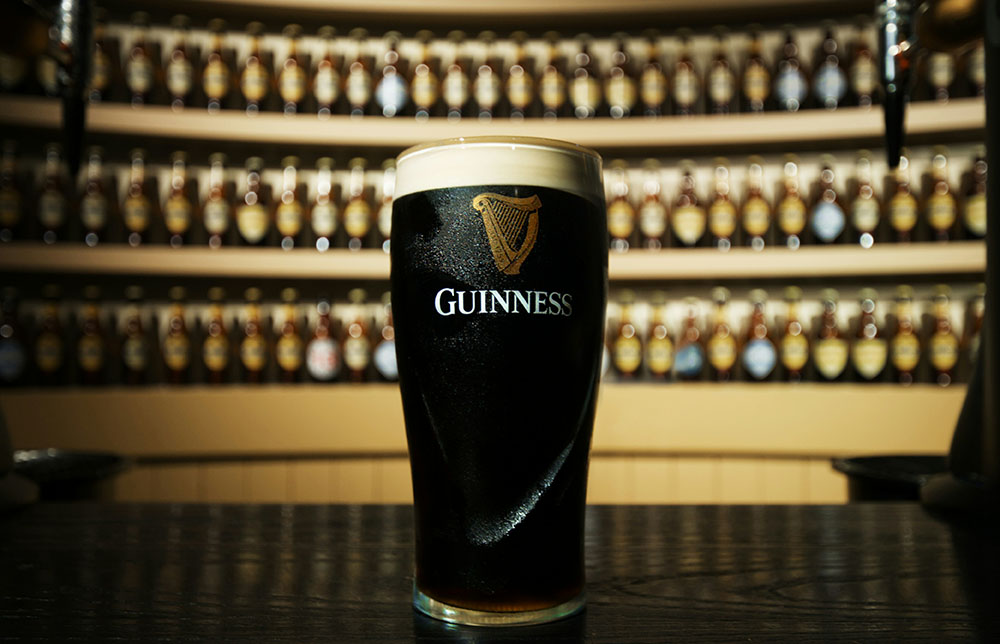
First Things First: Guinness Is Not Complicated — It’s Just Unforgiving
Guinness is a remarkably simple beer. Low carbonation, modest alcohol, roasted barley, nitrogen dispense. No hops arms race. No experimental yeast strains. No mango-infused nonsense.
And yet, it’s one of the easiest beers to get wrong.
Why? Because Guinness exposes every shortcut. Dirty glass? You’ll see it. Rushed pour? You’ll taste it. Poor line cleaning? It’ll announce itself before the first sip.
A perfect Guinness is less about brilliance and more about not messing it up.
The Pour: Ritual, Not Theatre
Yes, the two-part pour matters. No, it’s not just marketing.
A proper Guinness pour starts at roughly 45 degrees, allows the pint to settle, and finishes with a controlled top-up. This isn’t about drama — it’s about creating the right head structure and texture. Rush it, and the foam collapses. Skip the wait, and the mouthfeel suffers. Treat it like a lager, and the pint will punish you accordingly.
A perfect Guinness doesn’t need a stopwatch, but it does need patience.
The Head: Creamy, Stable, and Proud
The head is not decoration. It’s part of the beer.
A proper Guinness head should be creamy, dense, and stable, sitting slightly domed above the rim and lasting the length of the drink. It should leave lacing on the glass as you go — those little rings are not aesthetic flourishes, they’re evidence that something was done right.
If the head collapses after thirty seconds, something went wrong earlier in the chain.
Temperature: Cool, Not Cold
One of the most common Guinness crimes outside Ireland is over-chilling. Guinness should be cool and refreshing, but never icy. Too cold and the flavour disappears; too warm and bitterness takes over.
The perfect Guinness sits comfortably in that narrow middle ground — cool enough to refresh, warm enough to express roasted barley, coffee, and subtle sweetness. If it tastes flat or aggressively bitter, temperature is often the culprit.
Texture: This Is Where the Magic Lives
People talk about Guinness flavour, but texture is where the beer earns its reputation.
A perfect Guinness feels smooth, velvety, and almost creamy without being heavy. It should feel full on the palate, not thin or watery. That famous nitrogen cascade isn’t just for show — it contributes directly to mouthfeel.
If the texture is right, you forgive a lot. If it’s wrong, nothing else really matters.
Flavour: Balance, Not Intensity
A perfect Guinness is not bold or aggressive. It’s balanced.
You’re looking for a smooth interplay of roasted coffee, dark chocolate, gentle bitterness, and subtle sweetness. No sourness. No metallic edge. No burnt harshness. And definitely no “this tastes like the lines haven’t been cleaned since Easter.”
Guinness should be comforting, not challenging. If it’s shouting at you, something’s off.
Aroma: The Quiet Indicator
Aroma is subtle in Guinness, but important. A good pint smells clean and gently roasted, with hints of coffee, chocolate, and malt. Off-smells — sour, metallic, chemical — are early warning signs. Often, the nose knows before the mouth catches up.
If you hesitate before taking the first sip, trust that instinct.
Aftertaste: The Truth at the End
The finish is where bad Guinness gets exposed.
A perfect Guinness leaves a clean, dry aftertaste that fades gently, encouraging another sip. A poor one lingers unpleasantly — bitter, sour, metallic, or oddly sticky. If you don’t want the next mouthful, the pint has failed its final test.
Guinness should never punish you for finishing it.
The Glass: Non-Negotiable
A perfect Guinness cannot exist in a dirty glass. Full stop.
Grease, detergent film, fingerprints, lipstick marks — all of it ruins head formation, aroma, texture, and taste. Those tiny bubbles clinging to the inside of the glass aren’t “character,” they’re evidence of neglect.
This is the easiest thing to get right, and astonishingly common to get wrong.
The Vibe: It Matters, But It Can’t Save You
Guinness absolutely tastes better in the right setting. Low light, good conversation, a sense that the pint matters. A great atmosphere elevates a good Guinness — but it will never rescue a bad one.
The perfect pint is still perfect in silence. Vibe is the bonus, not the foundation.
So… Does the Perfect Guinness Exist?
Yes. But not everywhere. And not all the time.
The perfect Guinness is the result of:
- Clean equipment
- Proper storage
- Correct temperature
- Respect for the pour
- Staff who care
- A bar that understands what it’s serving
It’s not mythical. It’s just rare.
And when you find one, you don’t overthink it. You take a sip, nod quietly, and order another.
That’s when you know.
Do you agree? Leave a comment below and let us know if you have any other ideas.